We start the trail in the lovely seaside village of St Monans. You might recognise the village from the big screen - it appears in Whisky Galore and The Railway Man.
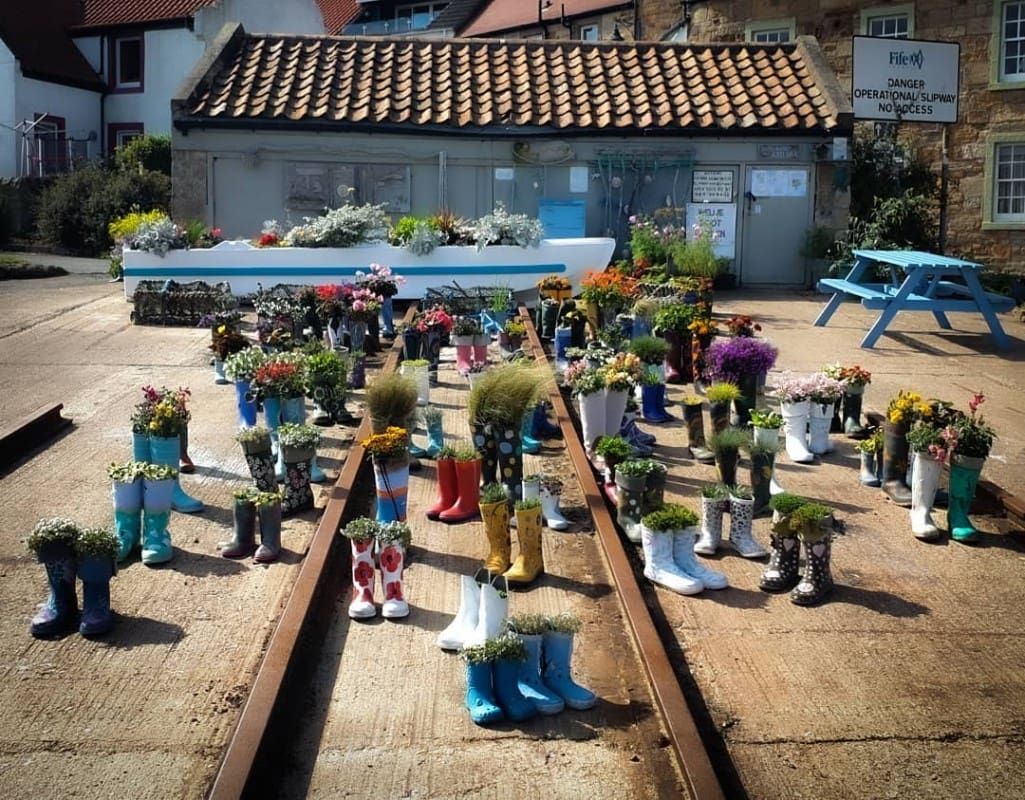
Down by the harbour you’ll find a very different garden - a welly boot garden!
The garden was started by Win Brown, a local teacher and amateur gardener who decided to put her grandchildren’s outgrown Wellington boots to good use and brighten up the slipway at the same time.
Other people donated their old boots too and now they decorate the rusted slip rails every summer.
The second stop on the trail is the traditional East Neuk fishing town of Pittenweem. The harbour is still used today for fishing boats and this is the theme for the next artwork on the trail which you’ll find on the shore not far from the fish market.
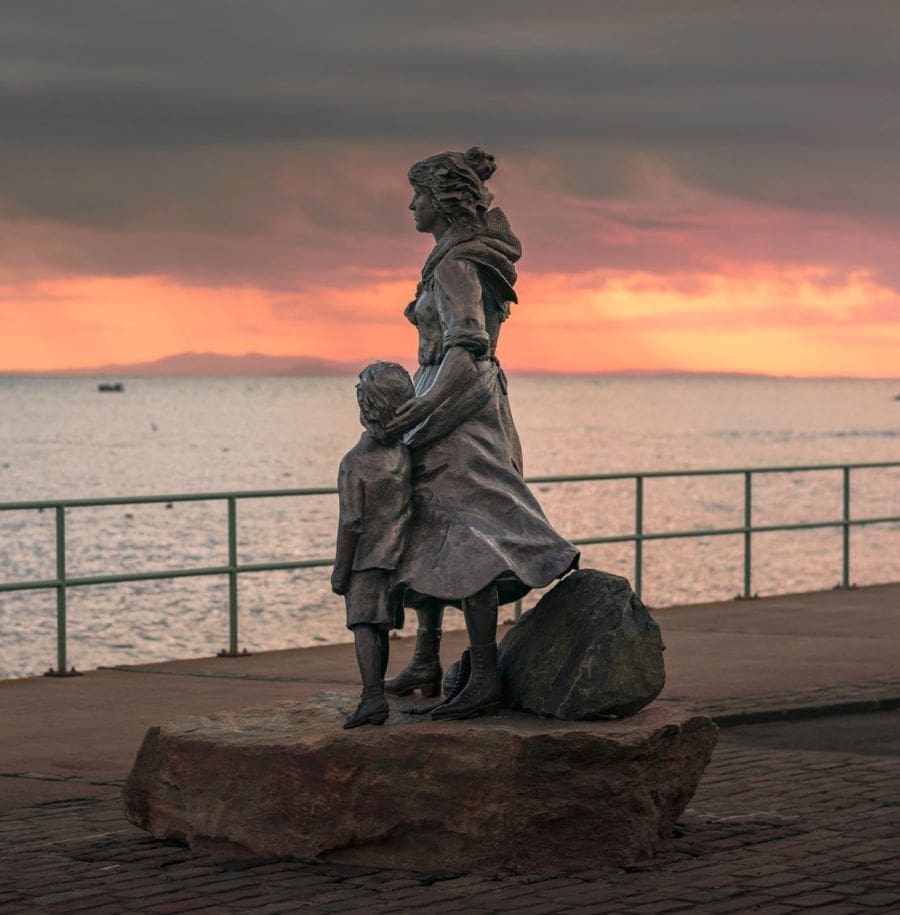
The Pittenweem Fishermen’s Memorial is a beautiful sculpture which depicts a fisherman’s wife and child scanning the horizon for the return of their loved one. It stands as a reminder of the importance of fishing to the history and heritage of Pittenweem and the East Neuk coast of Fife.
The artist is renowned figurative sculptor Alan Herriot DA ARBS, who has designed an emotive piece of art which evokes the nature and dangers of the fishing industry.
Pittenweem is also the location for two colourful murals. At the West Braes Tidal Pool Mural you'll find a wonderful artwork featuring puffins, seals and whales, reflecting the local maritime heritage and surroundings. Close to the Primary School is another piece of art - the Pittenweem Playpark Mural - which captures life in the coastal town beautifully.
Just along the coast the next stop is in Anstruther where you’re looking for a rather unusual building - you’ll find it opposite the Dreel halls.
The shell house was the eccentric creation of Alex Batchelor. Locally the house is also known as Buckie House since in some parts of Scotland seashells are called 'Buckies'. The house dates from 1692 but the seashells were added in the 1840s.
Anstruther is a lovely village, known for its connections to the sea, which you can learn about at The Scottish Fisheries Museum, and of course fish and chips!
Continuing east along the coast you'll arrive in Cellardyke, and this is where you will find a rather unusual art gallery - a red phone box! Gallery 495 shows a changing programme of exhibitions, featuring contributions from local, national, and international artists.
The final stop on the trail is the delightful town of St Andrews. It is a real gem, known around the world as the home of golf with possibly the most famous place to play golf in the world, The Old Course. It’s also home to the third oldest university in the English-speaking world, and the site of a 14th century cathedral which was by far the largest church in Scotland. It’s full of independent shops and place to eat, drink & stay.
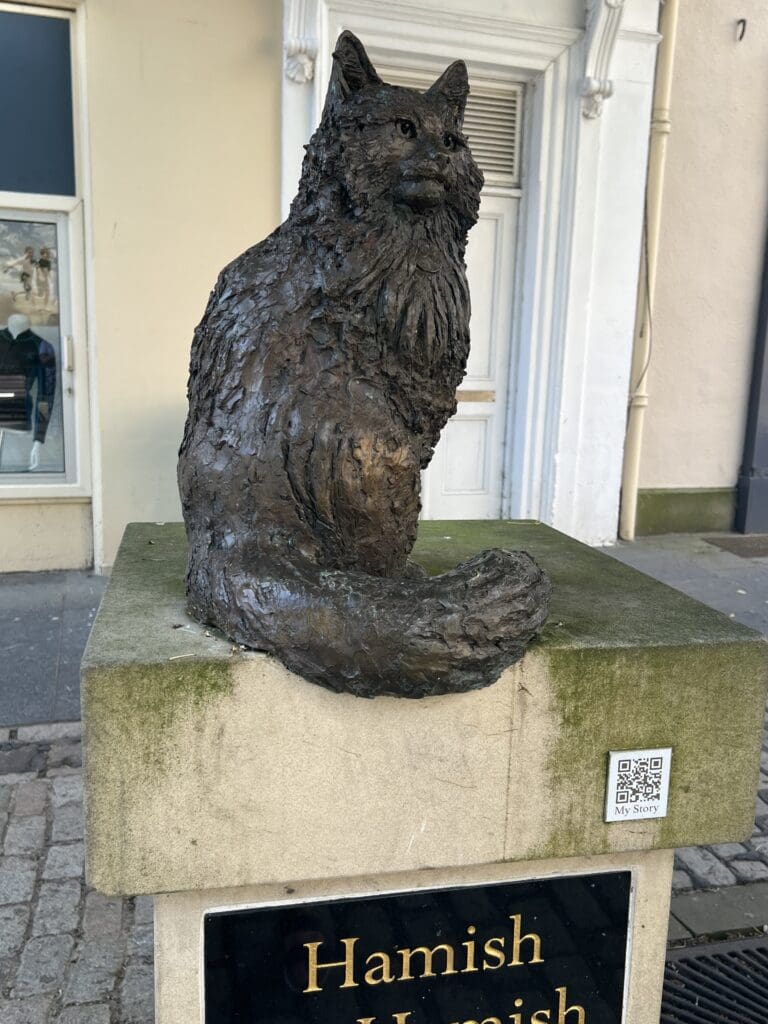
In the centre of town you’ll find the statue of Hamish McHamish. Hamish was a ginger cat that lived in the town and became famous after the book called ‘Hamish McHamish of St Andrews: Cool Cat About Town’ by Susan McMullan was published.
Hamish was born some time in 1999 and initially owned by Marianne Baird but he liked to wander, being fed and watered at various homes in the town. He was well loved by locals.
Hamish has passed away now, but he will long be remembered with great affection by the people and visitors of St Andrews with his very own statue.
Head down to the Old Course and close by, just off Golf Place you will see the Old Tom Morris Statue, who was born and lived in St Andrews and was known as the father of modern golf. He was an expert player and repeated championship winner and also a highly respected course designer and greenkeeper, a skilled club and ball manufacturer, and nurturer of young talent.
The University of St Andrews has an impressive sculpture collection which is located at buildings across the town. Highlights include a larger than life statue of St Andrews which you can see at the Wardlaw Museum - take time to go inside to explore the University's extraordinary art, history, science and natural history collections.
You can travel to all the locations by bus.